
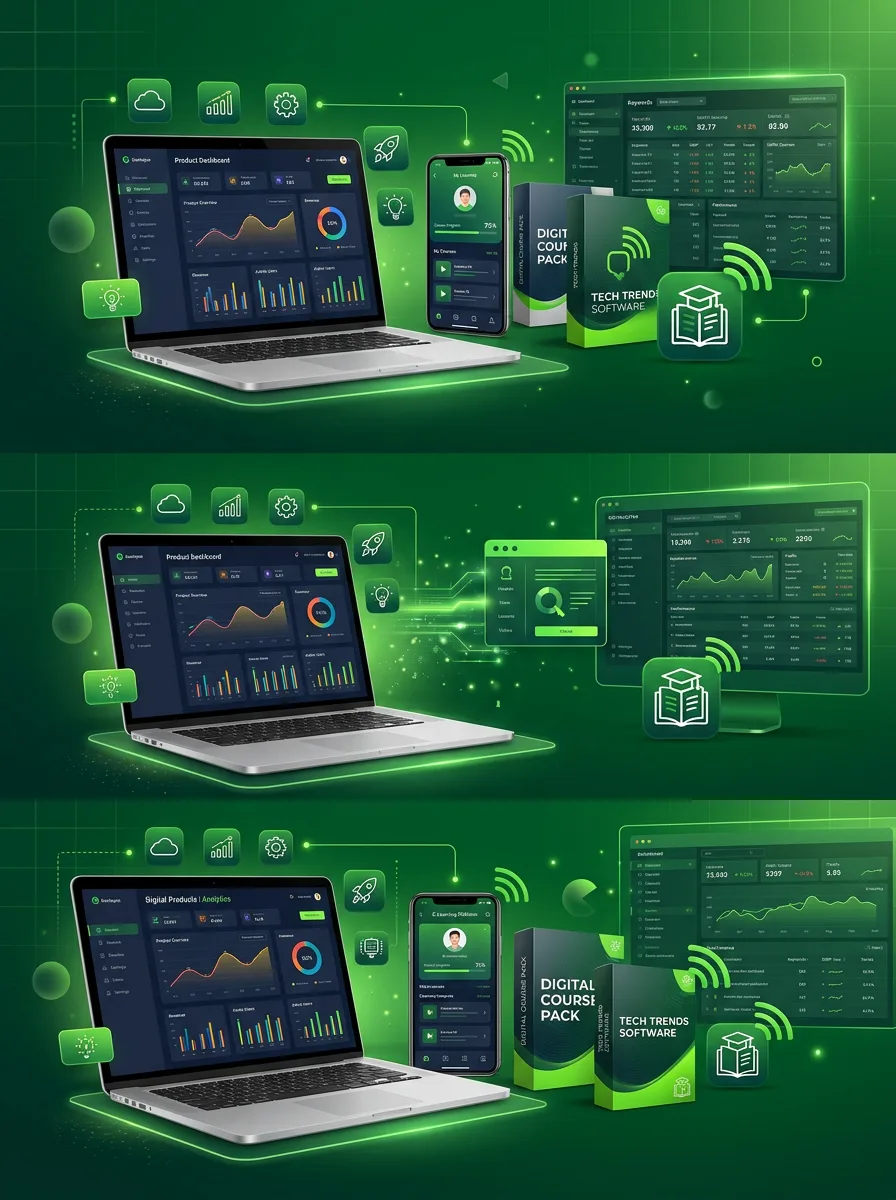

Introduction
In an increasingly digital world, the landscape of products and services is undergoing a radical transformation. Modern Digital Products—ranging from software applications to e-books and online courses—are becoming integral components of daily life and business operations. This article delves into the modern trends that define digital products today, the emerging technologies that drive their development, the challenges they face, and insights into their future. Modern Digital Products are reshaping the market.
Definition of Digital Products
Digital products are intangible goods that are delivered electronically rather than in physical form. They encompass a variety of formats, including software, online courses, digital music, e-books, and mobile applications. Unlike traditional products, digital goods can be easily replicated and distributed across global markets with minimal overhead costs, making them a versatile choice for both entrepreneurs and consumers.
The rapid rise of technology and the internet has facilitated the proliferation of digital products, allowing companies to reach broader audiences and consumers to access a wealth of information at their fingertips. In this context, understanding the significance of these products becomes crucial for anyone looking to engage with modern markets.
Importance of Digital Products in Today’s Economy
Modern Digital Products are not just a trend; they represent the future of how we interact with technology. Businesses that adapt to these changes will thrive.
One key aspect of Modern Digital Products is their ability to be updated continuously, providing users with the latest features without needing physical replacements.
As we explore these innovations, it is evident that Modern Digital Products will play a crucial role in our daily lives.
Understanding Modern Digital Products is essential for anyone looking to stay competitive.
The future success of businesses will hinge on their ability to leverage Modern Digital Products in innovative ways.
Consumer expectations are changing, and Modern Digital Products must meet these evolving needs.
Moreover, the trend toward subscription models in Modern Digital Products is reshaping revenue strategies.
As consumers embrace convenience, Modern Digital Products simplify their access to essential services.
Mobile integration with Modern Digital Products allows for real-time updates and notifications.
In today’s economy, digital products play a vital role in shaping consumer behavior and business strategies. They enable companies to reduce operational costs, increase efficiency, and foster innovative business models. For instance, subscription-based services have revolutionized how consumers engage with content, offering unlimited access to a plethora of resources for a recurring fee. This shift not only enhances customer relations but also stabilizes revenue streams for businesses.
By investing in Modern Digital Products, companies can significantly enhance user engagement.
Moreover, the accessibility of digital products promotes inclusivity, allowing consumers from various socio-economic backgrounds to access knowledge and services that were previously out of reach. As such, digital products are not merely tools for convenience; they are catalysts for economic growth and social change.
AI is increasingly being integrated into Modern Digital Products to improve user experience.
In the realm of Modern Digital Products, user-centric design is paramount.
Prioritizing UX in Modern Digital Products fosters deeper consumer trust and loyalty.
Current Trends Shaping Digital Products
Modern Digital Products are evolving to meet sustainability goals, appealing to eco-conscious users.
By integrating sustainable practices, Modern Digital Products can enhance their marketability.
Growth of Subscription-Based Models
One of the most significant trends in the digital product landscape is the rise of subscription-based models. Companies like Netflix, Spotify, and Adobe have popularized this model, allowing consumers to enjoy continuous access to services for a monthly fee. This approach provides businesses with predictable revenue while giving consumers flexibility and affordability.
Blockchain technology is creating new opportunities within the domain of Modern Digital Products.
Subscriptions also foster loyalty, as they encourage ongoing engagement and provide opportunities for upselling additional features or products. Businesses are increasingly recognizing the value of this model, leading to a surge in subscription offerings across various industries, from software to online learning platforms.
Rise of Mobile Applications
Modern Digital Products are benefiting from advancements in AR and VR, engaging users in novel ways.
The proliferation of smartphones has accelerated the development and adoption of mobile applications. With billions of active users globally, mobile apps are now essential tools for marketing, customer engagement, and service delivery. Businesses are leveraging mobile technology to reach consumers directly, offering tailored experiences that cater to individual preferences.
Moreover, the growing trend of remote work has spurred demand for productivity and collaboration apps, enabling teams to work effectively from different locations. As mobile capabilities continue to evolve, companies must prioritize mobile-first strategies to stay relevant in the competitive marketplace.
Integration of Artificial Intelligence
Connected devices are essential in the development of Modern Digital Products, enhancing functionality.
Artificial Intelligence (AI) is fundamentally reshaping how digital products are developed and utilized. From chatbots that enhance customer service to personalized recommendations in e-commerce, AI technologies are improving user experiences and optimizing business operations. Companies are increasingly incorporating AI to analyze consumer data, understand trends, and inform product development.
For businesses, adapting to the challenges of Modern Digital Products is vital for long-term success.
Additionally, AI-driven analytics tools provide businesses with insights into consumer behavior, allowing for data-driven decisions that can enhance product offerings. As AI technology advances, its integration into digital products is expected to deepen, further enhancing their functionality and user appeal.
The competitive landscape for Modern Digital Products is rapidly evolving, requiring constant innovation.
Increased Focus on User Experience
In a saturated digital marketplace, user experience (UX) has emerged as a critical differentiator for digital products. Companies are investing in UX research and design to ensure their offerings are intuitive, engaging, and user-friendly. A positive user experience not only attracts customers but also encourages retention and brand loyalty.
Maintaining security in Modern Digital Products is paramount for building consumer trust.
The design philosophy of putting the user first has led to the adoption of principles such as simplicity, accessibility, and responsiveness. As consumers become more discerning about their digital interactions, businesses must prioritize UX to stay competitive and relevant.
Emphasis on Sustainability in Digital Offerings
The future of Modern Digital Products will be driven by continuous learning and adaptation.
Sustainability is becoming an increasingly important consideration in the development of digital products. As consumers grow more conscious of their environmental impact, they are gravitating toward companies that demonstrate social responsibility. Digital products that focus on reducing carbon footprints, such as e-documents over paper or online courses versus physical classes, resonate well with eco-conscious consumers.
As we navigate this landscape, the role of Modern Digital Products in shaping the future is undeniable.
Anticipating the evolution of Modern Digital Products is crucial for businesses aiming for growth.
Businesses are beginning to adopt sustainable practices not only in their product offerings but also in their operations. This shift toward sustainability can enhance brand reputation, attract a loyal customer base, and contribute to long-term success in an environmentally aware market.
Emerging Technologies in Digital Product Development
Blockchain Technology
Blockchain technology is revolutionizing the way digital products are created, shared, and sold. Its decentralized nature offers enhanced security, transparency, and traceability, which are particularly valuable in industries such as finance, supply chain, and digital copyright. Blockchain enables secure transactions without the need for intermediaries, reducing costs and enhancing trust between parties.
Furthermore, smart contracts—automated agreements executed on the blockchain—simplify complex transactions and reduce the likelihood of disputes. As businesses explore blockchain’s potential, we can expect to see innovative applications in digital product offerings and business models.
Augmented and Virtual Reality
Augmented reality (AR) and virtual reality (VR) are emerging as transformative technologies in digital product development. These technologies provide immersive experiences that engage users in new and exciting ways, making them ideal for industries such as gaming, education, and real estate. For example, VR can create fully immersive training environments, while AR can enhance shopping experiences by allowing consumers to visualize products in their own space before purchasing.
The potential for AR and VR to enhance user experiences is vast, and businesses are starting to invest in these technologies to stay ahead of the curve. As hardware becomes more affordable and content offerings expand, the adoption of AR and VR in digital products is expected to grow exponentially.
Internet of Things (IoT)
The Internet of Things (IoT) is another pivotal technology shaping the landscape of digital products. IoT refers to the interconnection of everyday devices via the internet, allowing them to send and receive data. This connectivity enables the development of smart products that can offer real-time insights and automation. For instance, smart home devices like thermostats, lights, and security systems can be controlled remotely, providing convenience and energy efficiency.
As the number of connected devices continues to rise, businesses have the opportunity to create integrated digital products that enhance user experiences and streamline operations. IoT is poised to become a significant factor in data-driven decision-making and consumer engagement strategies.
Challenges in the Digital Product Landscape
Market Saturation
As the demand for digital products grows, so does the competition. The market is becoming increasingly saturated, making it difficult for new entrants to establish a foothold. With numerous options available to consumers, distinguishing a product becomes a daunting task. Businesses must innovate and communicate unique value propositions effectively to attract attention amidst the noise.
To navigate this challenge, companies need to conduct thorough market research, understand their target audiences, and develop distinctive branding strategies. Additionally, continuous improvement and adaptation of product offerings are essential to maintain relevance in a rapidly evolving landscape.
Data Privacy and Security Concerns
With the rise of digital products comes the responsibility of safeguarding user data. Consumers are increasingly concerned about their privacy and security, especially as data breaches become more common. Companies that fail to adequately protect user information risk damaging their reputation and losing customer trust.
To address these concerns, businesses must prioritize robust security measures, transparent data handling practices, and compliance with regulations such as GDPR. Educating customers about data privacy and the measures taken to protect their information can also foster trust and enhance customer relationships.
Maintaining Competitive Advantage
In a fast-paced digital environment, maintaining a competitive advantage is crucial for longevity. With rapid technological advancements and changing consumer preferences, businesses must remain agile and responsive to stay ahead. Developing innovative features, leveraging emerging technologies, and adapting to user feedback are essential strategies for sustaining a competitive edge.
Regularly analyzing market trends and consumer needs can help businesses pivot their strategies and product offerings as necessary. Continuous improvement and a commitment to excellence are paramount to thriving in a competitive digital landscape.
The Future of Modern Digital Products
Predicted Trends for the Next Decade
The future of digital products is likely to be shaped by several key trends, including increased personalization, the rise of no-code and low-code development platforms, and further integration of AI technologies. Consumers will expect more tailored experiences that reflect their individual preferences, making data-driven insights essential for businesses.
Moreover, as the demand for digital products continues to grow, the democratization of technology will enable a broader range of individuals and small businesses to create and distribute digital products without extensive coding knowledge. This shift could lead to even greater innovation and diversity in the digital product space.
How Businesses Can Adapt to Changing Trends
To thrive in the evolving digital product landscape, businesses must adopt a proactive approach to change. This includes investing in research and development to identify emerging trends and consumer needs. Companies should also foster a culture of innovation that encourages experimentation and embraces new technologies.
Furthermore, collaboration with tech-savvy partners and adopting agile methodologies can help businesses respond swiftly to changing market conditions and consumer demands. By remaining adaptable and forward-thinking, companies can position themselves for success in the future of digital products.
Conclusion
The landscape of modern digital products is dynamic and ever-changing, influenced by technological advancements, consumer preferences, and market demands. By understanding current trends, emerging technologies, and the challenges of the digital product environment, businesses can navigate this landscape effectively.
As we look to the future, the opportunities for innovation and growth in digital products are vast. Companies that prioritize user experience, embrace sustainability, and remain agile will be well-positioned to succeed in this exciting and rapidly evolving market.
FAQs
What are digital products?
Digital products are intangible goods delivered electronically, including software applications, e-books, and online courses.
Why are digital products important in today’s economy?
Digital products reduce operational costs, enhance efficiency, and promote accessibility, contributing to economic growth and social change.
What are some current trends in digital products?
Current trends include subscription-based models, mobile applications, AI integration, user experience focus, and sustainability.
What technologies are driving digital product development?
Key technologies include blockchain, augmented and virtual reality, and the Internet of Things (IoT).
What challenges do digital products face?
Challenges include market saturation, data privacy concerns, and the need to maintain a competitive advantage.
What is the future of digital products?
Predicted trends include increased personalization, democratization of technology, and further AI integration in product offerings.